
Subscribe to our newsletter!
We don't spam. You will only receive relevant and important tips for you and your business.
Unsubscribe anytime.
By Jacquie
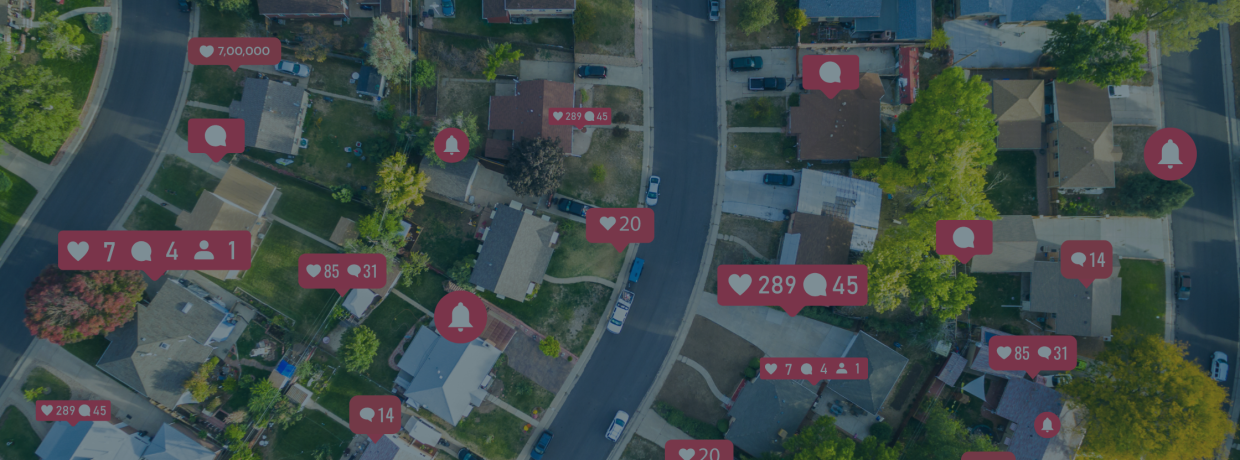
Homeowners seeking home service providers use social media primarily as a trust verification tool, not a discovery channel.
According to a BrightLocal Consumer Review Survey, 97% of consumers read online reviews for local businesses, and social media profiles function as a live extension of that trust-checking behavior. Homeowners look at your page to assess responsiveness, quality of work, and whether you engage with your community.
This means two things for your strategy:
Facebook remains the dominant platform for homeowners aged 35–65, the primary demographic for home services. Its neighborhood groups and local business pages make it the single most important platform for home service social media marketing. According to Pew Research Center, 71% of U.S. adults use Facebook, with the highest engagement rates among homeowner-age demographics (30–64).

Nextdoor is purpose-built for neighborhood-level recommendations. Homeowners actively ask for contractor referrals on Nextdoor, making it a high-intent channel that most home service businesses ignore. Claiming and maintaining a business profile on Nextdoor is a low-effort, high-return tactic.

Instagram is effective for home service businesses with strong visual output — landscaping, remodeling, painting, roofing. It skews younger (25–44) but is valuable for reaching homeowners early in a property ownership lifecycle. Instagram's own business data indicates that 70% of shoppers turn to Instagram for product discovery.
.png)
LinkedIn, TikTok, and X (Twitter) have significantly lower overlap with the homeowner-seeking-services demographic.
Unless you have strong existing audiences on these platforms, they should be secondary to Facebook, Nextdoor, and Instagram. More about choosing the best social media platforms for your brand.
Before/after content is the single highest-performing content type for home service businesses on social media.
It demonstrates competence visually, requires no copywriting expertise, and is inherently shareable. Each project you complete is a content asset.
How to execute: Photograph every significant project before starting and after completion. Post pairs with a brief caption describing the scope, location (city/neighborhood level), and outcome. Tag the neighborhood or city if the platform supports it.
Done consistently, this kind of content can take off. Fra-Dor, a Minnesota landscape supply company, used DIY project ideas on Pinterest to send over 50,000 people to their website. See how. You don't need to start there. One good photo a week is the right start.
A plumber posting "5 things to do before the first freeze" earns attention from homeowners who aren't currently in the market but will remember the brand when they are.

A screenshot of a 5-star review paired with the project photo creates a content type that is both social proof and visual content simultaneously.
Sprout Social's 2023 Index found that 69% of consumers expect a response from businesses on social media within 24 hours. For homeowners evaluating contractors, an unanswered comment — especially a complaint — is more damaging than not posting at all.
Responding publicly to both positive and negative feedback signals professionalism and accountability.
Monitoring social conversations is a practical tactic, not a philosophy. For home service businesses, it yields three concrete benefits:
Tools for social listening at small business scale: Hootsuite (paid), Google Alerts (free), and native Facebook/Instagram notification monitoring (free).
Most owners don't have time to post every day, and that's fine. Here is the short version:
If you rent equipment or sell supplies, your social media doesn't need a big personality. Show the work: your equipment on a real job site, what's available this week, and a quick tip on using it right. Homeowners and contractors follow you because it helps them, not because they want to hear from the founder.
A functional social media plan for a home service business does not need to be complex. It needs four components:
Building a loyal following on social media is less about being everywhere and more about showing up consistently in the right places with content that earns trust.
If you're ready to put a strategy behind your social presence — or want an expert team to run it for you — contact Hoist to see how we help businesses grow their audience and turn followers into customers.
Grow Your Social Media & Grow Your Business