
Subscribe to our newsletter!
We don't spam. You will only receive relevant and important tips for you and your business.
Unsubscribe anytime.
By Darren DeYoung

Search engine optimization (SEO) consistently delivers the highest long-term ROI for small businesses, with studies showing an average return of $22 for every dollar invested. However, email marketing produces the fastest returns at $36-$42 per dollar spent, making it ideal for businesses with existing customer databases. The optimal channel mix depends on your business model, target customer location, and available budget.
The effectiveness of digital marketing channels varies significantly based on your business type. Service-based businesses serving local markets see dramatically different results than e-commerce companies selling nationally. Understanding these differences prevents wasted budget on channels that won't deliver for your specific situation.
| Channel | Best For | Typical Timeframe |
|---|---|---|
| Local SEO | Service businesses | 3–6 months |
| Email Marketing | Businesses with customer lists | Immediate |
| Organic Social | B2C with visual products | 6–12 months |
| Google Ads | High-value services, seasonal businesses | Immediate |
| Content Marketing | Complex products | 9–18 months |
Small businesses frequently make the mistake of starting with social media because it appears free and accessible. However, social platforms now require significant ad spend to reach meaningful audience sizes.
Organic reach on Facebook averages just 5.2% of page followers. For a business with 1,000 followers, only 52 people typically see each post without paid promotion.
The better approach: Start with channels where your potential customers are actively searching for solutions (search engines) or where you already have an audience (email lists). Add additional channels only after establishing a strong foundation.
Service-based small businesses should prioritize Google Business Profile optimization and local citation building before investing in other digital marketing channels. A properly optimized Google Business Profile can generate 5-10 qualified leads per week for local service businesses without additional advertising spend. The setup requires 8-12 hours of initial work and 1-2 hours monthly maintenance.
Your Google Business Profile requires complete information in every field. Incomplete profiles rank significantly lower in local searches. Essential elements:
Businesses with 50+ Google reviews rank higher in local pack results than those with fewer reviews, even when the lower-volume businesses have higher average ratings. Review velocity (how frequently you receive new reviews) matters more than total count. Create a sustainable review generation system:
Citations, mentions of your business name, address, and phone number (NAP) on other websites, serve as trust signals to search engines. However, citation quality matters far more than quantity. Priority citation sources for local businesses:
Ensure NAP consistency across all citations. Inconsistent data weakens trust signals and can suppresses local rankings.
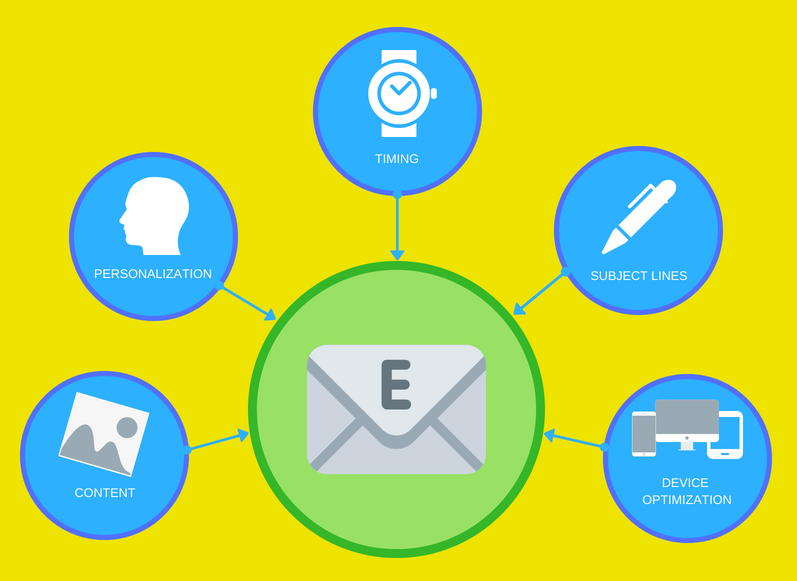
Small businesses with email lists of 500+ contacts can expect 18-25% open rates and 2-4% click-through rates using straightforward, value-focused emails. A well-executed email campaign to 1,000 subscribers typically generates 20-40 website visits and 2-5 conversions. Unlike social media, email marketing provides direct access to your audience without platform algorithm interference, making it the most reliable channel for small business customer communication.
Purchased email lists violate anti-spam laws (CAN-SPAM Act in the US, GDPR in Europe) and deliver terrible results—open rates below 5% and high spam complaint rates that damage your sender reputation. Instead, build your list organically:
In-Person Collection Methods:
Website Collection Methods:
Generic "newsletter" emails consistently underperform because they lack clear purpose. Instead, send focused emails with single, specific objectives:
Educational Emails (Best Open Rates: 25-30%): Answer frequently asked questions from customers. For example:
Educational emails build trust and position your business as the expert customers turn to when they're ready to purchase.
Promotional Emails (Best Conversion Rates: 3-5%): Announce sales, seasonal promotions, or limited-time offers. Keep promotional emails to 25% or less of your total email volume to avoid subscriber fatigue. Include:
Paid advertising makes strategic sense for small businesses in three specific situations:
Landscapers, tax preparers, HVAC companies, and other seasonal businesses face concentrated demand periods where paid advertising delivers outsized returns. A tax preparation service might profitably spend $5,000 on Google Ads in February-April when search volume peaks, then pause advertising during slow months rather than maintaining year-round campaigns.
A new business has zero search visibility and needs immediate leads while SEO efforts mature. A 6-12 month paid advertising campaign generates revenue during the "SEO gap period" until organic rankings develop. Plan to reduce paid spend gradually as organic traffic increases.
Professional services with average customer values exceeding $5,000 (legal services, financial planning, high-end home remodeling) can profitably pay $200-$500 per customer acquisition. These businesses have favorable economics that support sustained paid advertising.

The fundamental difference between paid and organic marketing: Paid advertising rents visibility while organic marketing builds owned assets.
Facebook and Instagram ads show your business to people based on demographics and interests, not active search intent. This works well for impulse purchases and visual products but poorly for services people actively search for when they need them.
Compare the intent difference:
Small businesses require a minimum 12-month commitment to content marketing before seeing measurable traffic increases, with realistic expectations of 50-200 monthly organic visits after the first year. Consistently publishing high-quality and user-friendly articles will get the ball rolling for most small businesses.
Content marketing follows a compound growth pattern. The first six-twelve months feel unproductive because new websites lack domain authority and new content takes time to rank. However, content published in months 1-6 typically reaches peak traffic in months 9-15, creating a delayed but substantial return on effort.
The phrase "high-quality content" has become meaningless through overuse. Specifically, high-quality small business content means:
Comprehensive Answer Depth: Address the full question someone searching for this topic wants answered. If writing about "how much does kitchen remodeling cost," include:
Experience-Based Expertise: Business owners are the "expert" so include details that only come from direct experience:
For example, a pediatric dentist writing about children's dental anxiety shouldn't just list generic tips. Instead, share: "In our practice, we've found that letting children hold the water suction tool themselves reduces anxiety more effectively than any other technique we've tried. When kids control one aspect of the appointment, they feel less helpless."
Small businesses often write about topics they find interesting rather than topics potential customers actually search for. High-value content topics share these characteristics:
Most small businesses overinvest in social media relative to ROI it generates. Social media works best for businesses with highly visual products (restaurants, retail, photography, fitness) selling to consumers. Service-based B2B businesses and those serving local markets see minimal return from social media efforts and should instead focus on Google Business Profile optimization, local SEO, and email marketing.
If pursuing social media, small businesses should focus on one platform maximum rather than attempting presence across multiple networks.
The social media landscape has fundamentally changed. Organic reach has declined dramatically:
Source: Hootsuite Social Media Trends Report
Depending on your target audience and who you are trying to reach, specific social media networks are more obvious to use than others. Knowing your audience and where they are is half the battle. Once you know where they are, they are easier to reach allowing your business to grow.
Small businesses should focus on 2-3 digital marketing channels maximum rather than attempting comprehensive multi-channel presence. The right channel combination depends on three factors:
Attempting too many channels simultaneously dilutes effort and prevents any single channel from generating meaningful results. A small business maintaining mediocre presence across five channels underperforms a business executing two channels very well.
Your competitor with 10 employees can maintain multi-channel presence that's unsustainable for your 3-person team. Focus on doing fewer things well rather than mimicking larger competitors' strategies.
Most digital marketing channels require 6-12 months before generating meaningful results. Small businesses often abandon efforts after 2-3 months, right before the inflection point where results typically accelerate.
Commit to 12-month timelines for organic channels (SEO, content marketing, email list building) before evaluating success.
Small businesses should track two primary metrics monthly:
Vanity metrics like social media followers, page views, and email open rates provide interesting data but don't directly indicate business growth.
Focus measurement time on metrics that connect to revenue, and review data monthly rather than daily to identify actual trends versus normal fluctuation.
The abundance of available metrics tempts small businesses to track dozens of data points that don't inform decision-making.
Effective measurement focuses on metrics that answer: "Is this channel generating profitable business results?"
Running a small business or building a successful startup is incredibly difficult. Throw in fierce economic competition and the constant pressure to survive, and no wonder 48% of small businesses fail in their fifth year.
But by choosing the right digital marketing strategies and aligning your business with a partner who is more concerned about your revenues than clicks, you can stand out from the crowd. If you want to take your business to the next level, let’s talk. We work with businesses large and small and will show you that digital marketing is a great investment for any business.
Talk Through Your Digital Marketing Strategy (No Cost, No Pitch)