
Subscribe to our newsletter!
We don't spam. You will only receive relevant and important tips for you and your business.
Unsubscribe anytime.
Many businesses boost Facebook posts because it feels simple, fast, and safe. A few clicks, a small budget, and suddenly more people see your content.
But simplicity doesn’t always equal effectiveness.
In this case study, we compared a boosted Facebook post against a structured Facebook ad campaign to answer a common question: Which option actually drives measurable business results? The answer isn’t subjective, it’s in the data.

A boosted post is an existing Facebook post that you pay to show to more people. Boosting is done directly from your Facebook Page, without using Ads Manager.
Boosted posts are designed for visibility and engagement, not precision.
In short, boosting helps people see your content, but it does not help you understand or influence what they do next.
A boosted post looks like an ad in the Facebook or Instagram feed. When you boost the post, you’ll define who you want to reach, your max budget, and how long you want to boost the post for. You can also set these parameters when setting up an ad.
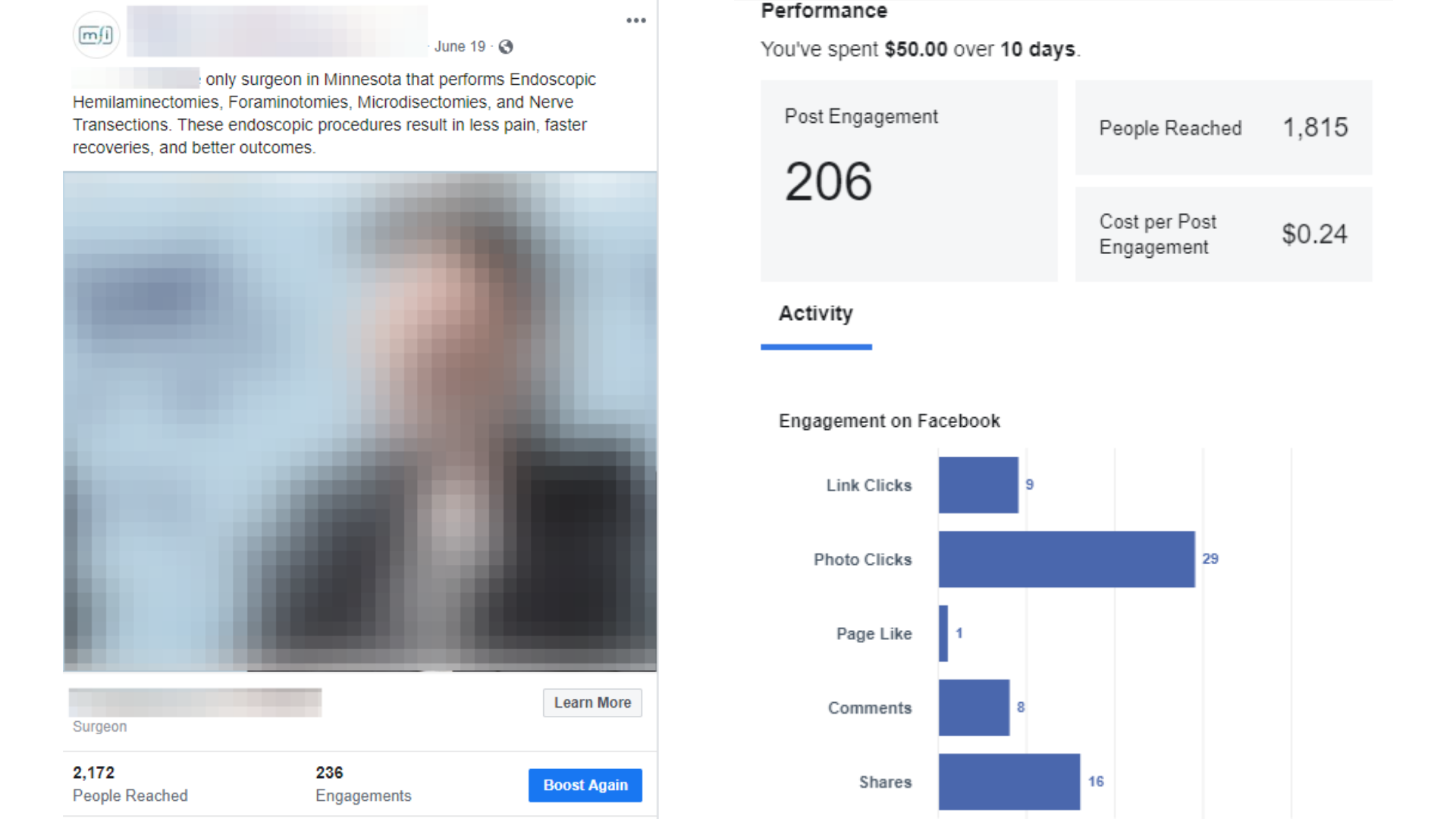
As you can see in the boosted posts below, they reached a combined 3,473 users and spent $90.00. But, the only other metrics we can track are link clicks, photo clicks, page likes, comments, and shares.
.png)
Facebook ad campaigns are built inside Ads Manager, where structure, intent, and measurement are central.
Unlike boosted posts, ad campaigns allow you to:
Most importantly, ad campaigns are designed to answer one essential question: Did this ad contribute to a business result?
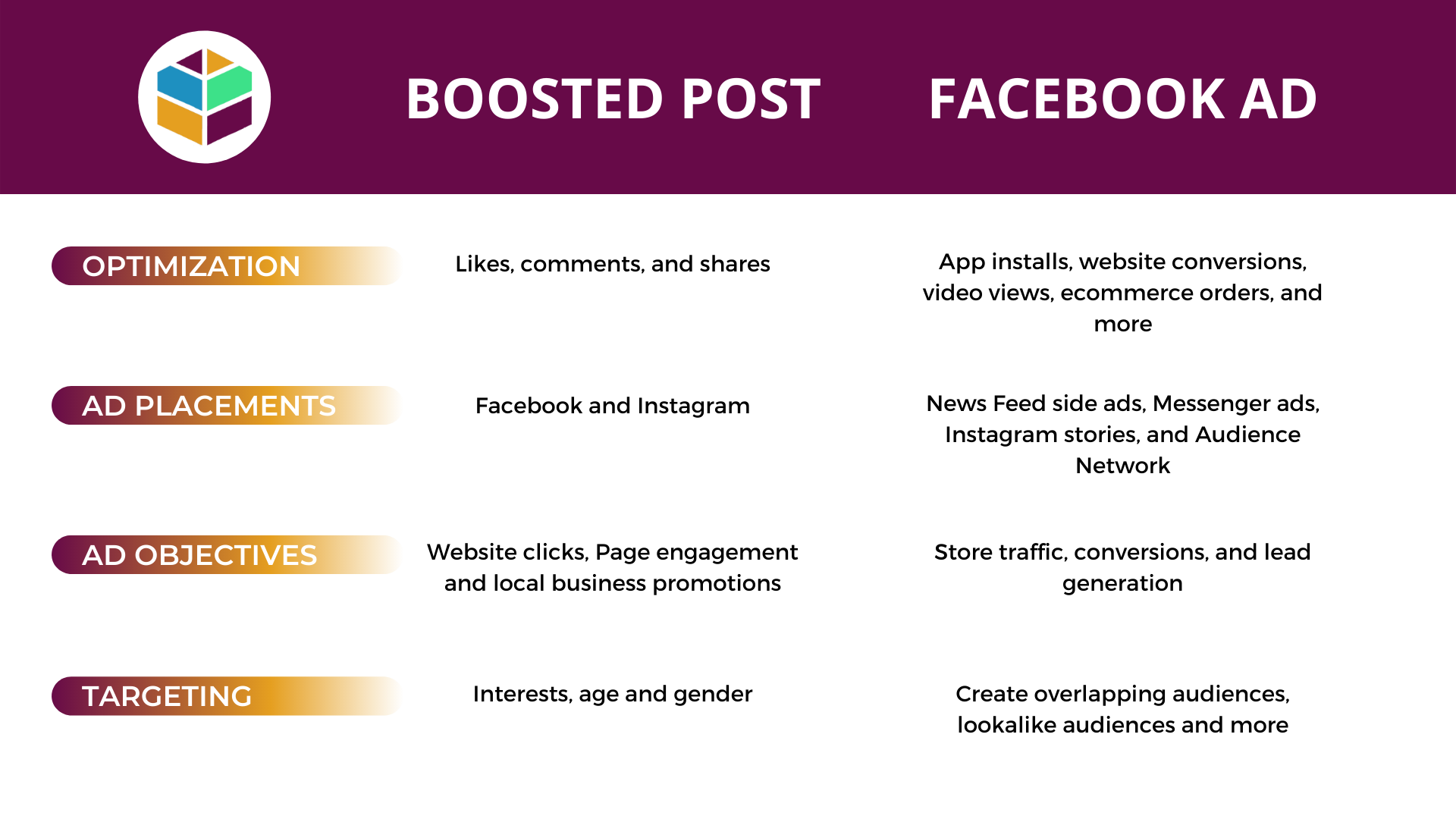
When you boost a post, you can only choose whether you want to place the ad on Instagram in addition to Facebook. In ads, you can choose placements in News Feed side ads, Messenger ads, Instagram stories, and Audience Network.
Both boosted posts and ads allow you to choose an objective, which will help you determine which campaign type aligns with your goals. Boosted posts only allow you to choose between website clicks, Page engagement and local business promotions. The full ads system lets you choose objectives like store traffic, conversions, and lead generation.
Boosted posts let you target interests, age and gender. This helps you reach people who most likely care about your business. Ads Manager has advanced tools to create overlapping audiences, lookalike audiences and more.
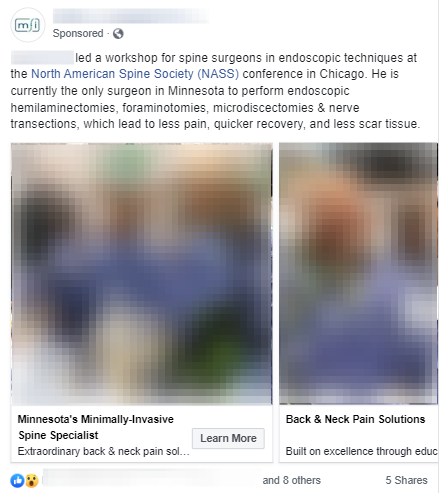
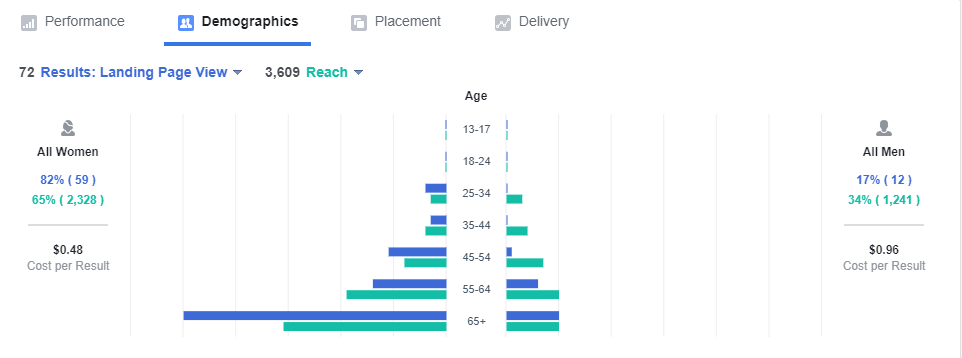
Since we ran an ad instead of boosting the post, we were able to add a call-to-action (CTA) & track conversions. This campaign resulted in 72 website visits, 4,144 impressions and reached 3,609 people in 8 days, for a total cost of $40.
As you can see, the ad reached a much larger audience than the boosted posts for half of the cost. But, we can’t track conversions from the boosted post, so we don't know whether the ad resulted in more site visits. For this client, website visits are more valuable as they are more likely to lead to a form submission.
Boosted posts are not “bad.” They’re just limited.
They work best when:
Boosted posts should support visibility, not replace strategy.
Ad campaigns are the right tool when:
If your business relies on marketing to drive growth, ad campaigns provide clarity that boosted posts cannot.
The biggest mistake businesses make on Facebook is confusing exposure with effectiveness.
Boosted posts create noise. Ad campaigns create insight.
If you want to know what’s working—and why—your marketing must be built around objectives, tracking, and optimization. That’s where Ads Manager excels, and where boosted posts fall short.
Need Help Running Facebook Ads the Right Way?