
Subscribe to our newsletter!
We don't spam. You will only receive relevant and important tips for you and your business.
Unsubscribe anytime.

Consistent branding is the primary mechanism through which small businesses earn trust from people who have never bought from them before. When a prospect encounters your brand — whether through a Google search, a Facebook ad, a friend's referral, or your storefront window — they make a rapid credibility judgment based almost entirely on visual and tonal coherence.
If what they see doesn't match what they expected, they move on.
The stakes are concrete: brand visibility is 3.5 times higher for consistently presented brands, and a consistent presence across all platforms can increase revenue by up to 23%.
For a small business operating with limited marketing budgets, that kind of lift doesn't come from spending more, it comes from showing up the same way every time.
This article explains what brand consistency actually requires, why it matters psychologically, and what practical steps small business owners can take to achieve it without a full in-house creative team.
Brand consistency is not about having a nice logo. It means that every customer-facing touchpoint — your website, social profiles, email signature, invoices, signage, vehicle wraps, and sales conversations — reflects the same visual identity and communicates with the same voice.
The elements that must remain uniform include:
When these elements are applied inconsistently — different colors on your website versus your Facebook page, a formal email tone versus a casual Instagram presence — the friction that creates is not just aesthetic. It signals disorganization. And for a new customer who doesn't yet know whether to trust you, disorganization reads as risk.
When we encounter a brand repeatedly and its presentation matches our prior experience of it, familiarity is interpreted as reliability, even when we have no direct experience with the company's products or services.
This is not a marketing theory. It reflects how the brain categorizes risk.
Unfamiliarity triggers skepticism. Familiarity reduces it.
It takes 5 to 7 impressions for consumers to remember a brand, and those impressions only compound into trust when they're consistent. An inconsistent brand forces each new encounter to be processed from scratch.
No accumulated familiarity, no accumulated trust.
For small businesses competing against larger, better-resourced competitors, this dynamic is especially consequential.
You may not be able to out-spend a regional chain on advertising. But you can deliver a more coherent, more trustworthy brand experience at every point of contact, and that consistency can close the credibility gap.
For 32% of consumers, trust is a prerequisite for purchasing from a brand. That means roughly one in three of your prospective customers won't buy from you at all until they trust you, and trust is built through consistent, repeated exposure to a coherent brand.
Inconsistent branding has measurable financial consequences that most small business owners underestimate. These losses are invisible:
Consider what happens when a prospect follows this typical path:
None of that is captured in your analytics as a lost sale. But it happened.
It takes approximately 50 milliseconds for people to form an opinion about your website. In that moment, a mismatched brand isn't just an aesthetic problem, it's a trust failure that no amount of good copy or competitive pricing can overcome.
Conversely, businesses that invest in consistency see a compounding return: 68% of companies report that brand consistency has contributed 10% to more than 20% of their revenue growth.
For most small businesses, the website is the single most important brand asset, and the most commonly neglected one. It is where prospects go to decide whether you're legitimate, whether you're the right fit, and whether they're willing to call.
Your website must do three things from a branding standpoint:
A prospect arriving at your website from a Facebook ad is performing an unconscious consistency check.
If what they find there matches what drew them to click, their confidence increases.
If it doesn't, that confidence evaporates and so does the conversion.
90% of consumers expect to have a similar branded experience across your marketing channels. That expectation applies directly to the relationship between your digital advertising, your social presence, and your website.
Most small business owners understand branding in the abstract but underestimate how many individual touchpoints actually need to be managed.
These are the five most common points of failure.
This is often the first visual impression a prospect receives, and it is frequently out of date. If your GBP shows an old logo, inconsistent business name formatting, or different hours than your website, it creates immediate doubt.
Profile photos, cover images, and bio copy often drift over time, especially when multiple people manage accounts. The result is a fragmented brand identity across platforms. Instead, build trust with your social media.
Physical Signage and Vehicles
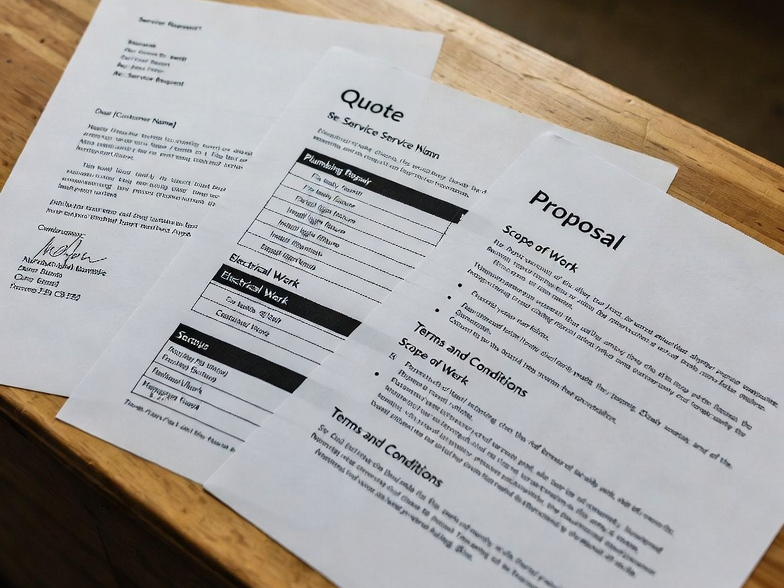
If you operate a business with a physical presence or service vehicles, your offline brand must match your digital brand. A significant portion of your new leads will search for you online after seeing you in the physical world and the mismatch creates friction.
If your team doesn't know how to represent the brand — what language to use, what to say they do, what the company voice sounds like — then every customer interaction is a consistency risk. 84% of consumers believe a company's brand is influenced by the personal brands of its employees.
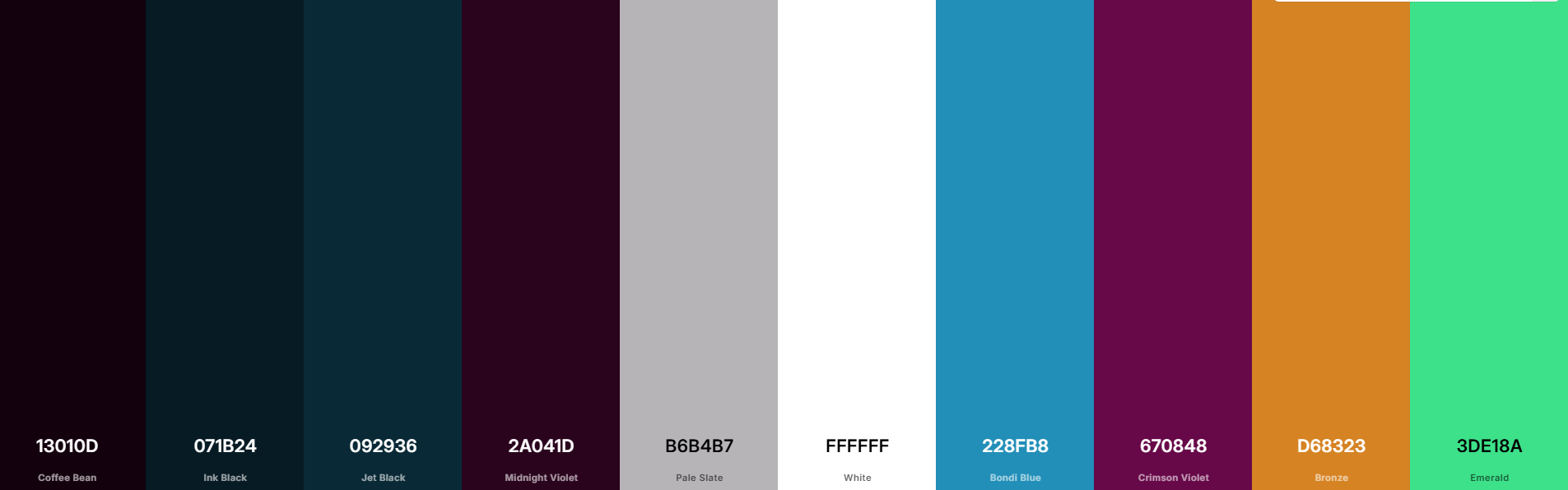
A brand style guide is the operational document that defines your brand's visual and verbal identity. It doesn't need to be a 60-page PDF.
For most small businesses, a 4–6 page document covering the following is sufficient:
Without this document, brand consistency depends entirely on individual judgment — and individual judgment varies.
Before you can maintain consistency, you need to know what you're working with. Conduct a brand audit across every active channel:
Flag every discrepancy. Prioritize by the order in which new customers are most likely to encounter them.
Brand consistency erodes over time without a maintenance process.
Designate one person responsible for brand approval on new materials.
Build a simple quarterly check into your calendar to review active touchpoints against your style guide.
If anyone on your team creates customer-facing content — emails, proposals, social posts, phone greetings — they need to understand and be able to apply your brand standards.
A 30-minute onboarding session with your style guide as the reference document is sufficient for most small teams.
A professional brand audit and the creation of a foundational style guide is a one-time investment with long-term compounding returns. The ongoing maintenance is manageable internally once the foundation is in place.
Rebranding is appropriate when the existing identity is actively creating the wrong impression or no longer reflects the business.
The investment depends on how much foundational work is required.
Creating a brand style guide from scratch typically runs $3,500–$5,000 when done professionally. Applying it across existing digital touchpoints is often less.
The more meaningful number is the revenue impact of not doing it: consistent branding can increase revenue by up to 23%, a return that dwarfs the upfront investment for most small businesses.
Yes, with a well-constructed style guide and access to tools like Canva Pro or Adobe Express (which allow you to lock brand colors and fonts into templates), a non-designer can maintain brand consistency across most digital channels.
The critical investment is in the initial setup and documentation, not ongoing design resources.
Brand consistency is not a luxury reserved for companies with marketing departments.
It is the fundamental mechanism by which small businesses earn trust from strangers, and trust is the precondition for every sale you will ever make to a new customer.
88% of American consumers buy from brands they trust. The question isn't whether trust matters.
The question is whether your brand, as it exists across every touchpoint a prospect might encounter, is building it or undermining it.
The businesses that get this right aren't necessarily the ones with the biggest budgets. They're the ones that show up the same way, every time, everywhere.
Is your brand building trust or creating doubt?