Audit
Subject: counselingcare.us
Conversion & Emotional-Resonance Review · Prepared by Hoist

The site isn’t broken. It’s silent to the person it’s meant to reach.

A blunt, evidence-led review of counselingcare.us — measured, not guessed. Real Google Lighthouse runs, captured screenshots, and the heuristics Peep Laja’s CXL team uses to find why visitors don’t convert. The surprise: technically, this site is in good shape. So this isn’t about the code — it’s about the conversation a hurting person has with the page when they land on it. Every claim below links to its source.

C− Strong, caring practice. Technically healthy site. But the experience is silent to the person it’s meant to reach.
0
Performance
0
Accessibility
0
Best Practices
0
SEO
0s
LARGEST CONTENTFUL PAINT
(mobile · target ≤2.5s ✓)

Source: live Google Lighthouse (mobile), homepage, 30 June 2026. Here’s the twist — technically, this site is in good shape. Which means the problem isn’t the code. It’s the conversation. Page ships 1,636 KB over 46 requests, CLS a clean 0.023 — all fine. The only real bloat is 370 KB of unused JavaScript.

01

The site isn’t broken. It’s silent.

Counseling Care has the hardest part already solved: a real, caring practice — licensed clinicians, two Twin Cities locations, insurance and sliding-scale, and genuinely high-value care like TMS and Spravato for treatment-resistant depression. The site that represents it loads fast and ranks well. And it says almost nothing to the person in pain who lands on it.

This isn’t the usual “it’s slow and broken” story — the measurements say otherwise. A prospective client forms a first impression in about 50 milliseconds (NN/g) and 46.1% judge a company’s credibility partly on visual design (Stanford/Fogg). Right now that snap judgement meets a decorative stock photo — a plant between two empty chairs — and a wall of cool, institutional blue.

The findings opposite are ranked by how directly they cost appointments. None of them require leaving WordPress, and none require a faster server. They do require the site to start sounding like it understands the person reading it.

Top findings, by severity
  1. Critical Emotionally invisible hero — a decorative stock photo (a plant between two empty chairs) with no value proposition and nothing for a hurting visitor
  2. Critical No single primary action — three near-identical blue ghost CTAs (About / Services / Counselor), none of them “Request an appointment”
  3. High Org-centric, “churchy” copy that never names the visitor’s pain or the relief they want
  4. High No phone number in the header — no one-tap way for someone in distress to call
  5. High Cold, grayscale stock imagery — plants, clocks, drone shots; almost no human faces
  6. High A line on Contact that tells visitors the site is “NOT reviewed daily”
  7. Medium Inward vanity metrics (“10+ Providers / 10+ Employees”) and a stale “© 2024” footer
02

How we judged it

We didn’t rely on opinion. The audit triangulates three lenses, and every external claim is linked so you can check our work.

1. Research-first CRO. We walked every screen through Peep Laja’s ResearchXL framework and the Conversion Sequence Heuristic. Laja’s core law: “clarity trumps persuasion,” and a value proposition must land in ~5 seconds.

2. Emotional design & targeting. Talia Wolf’s emotional targeting — sell the feeling, not the features — and Aarron Walter’s emotional-design hierarchy (functional → reliable → usable → pleasurable).

3. First-party measurement & the ad economics. Real Google Lighthouse runs and captured screenshots — not guesses — read against the cost of the paid clicks this page is already buying.

The conversion sequence heuristic

C = 4m + 3v + 2(i − f) − 2a

m = motivation · v = value proposition · i = incentive · f = friction · a = anxiety

Source: MECLABS conversion sequence heuristic

Hold this in mind as you read. The value proposition carries three times the weight of friction or anxiety — and on this site the value proposition, to the person hurting, is close to zero. That’s the term doing the damage.

03

The first five seconds
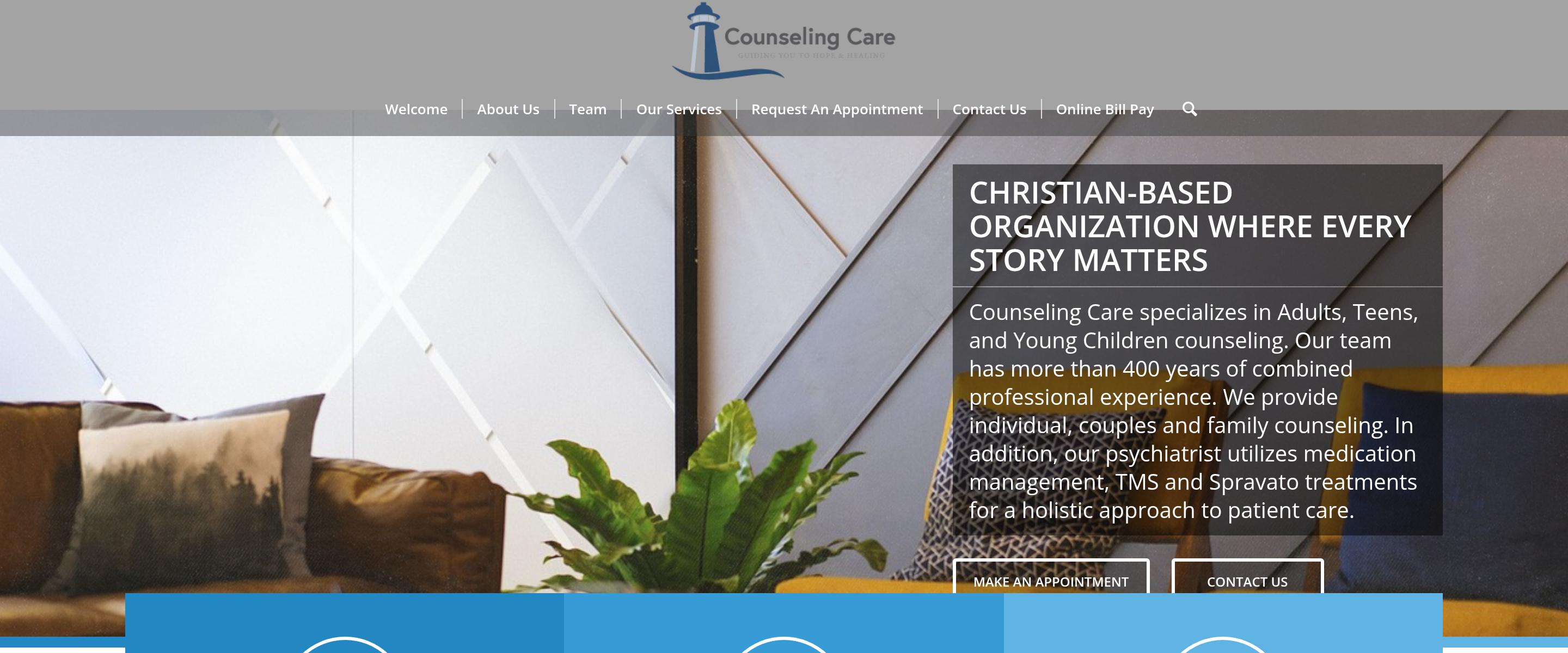
counselingcare.us — the hero
The homepage hero: a potted plant between two empty chairs
This is the first thing a hurting person sees. A stock photo: two chairs, throw pillows, and a potted plant dead-center. No headline, no value proposition, no action. The most valuable real estate on the site says nothing to the person it’s for.
Critical · Clarity & emotion

Someone in pain can’t answer “is this for me, and can it help?” in five seconds.

The hero spends its most valuable space on decoration. What a frightened visitor needs to see — who this is for, the relief it offers, and one thing to do next — is never stated. A first impression forms in ~50 ms and rarely changes (NN/g), and clarity beats persuasion every time. The 5-second value-prop test fails here: the image could belong to any furniture catalogue, not a clinic that changes lives.

46.1%
of people assess a site’s credibility partly on visual design — the look decides whether they trust you before they read a word.

Sources: NN/g — 50ms first impression · Stanford/Fogg — 46.1% · CXL — the 5-second test

Fix: A hero that names who it’s for and the relief it brings (“Anxiety doesn’t have to run your life. We can help.”), one warm image of a real person, and one primary action.
04

You’re paying for clicks this page doesn’t convert

Critical · Wasted ad spend

Every paid click that lands here costs the same whether or not it turns into an appointment.

Counseling Care runs paid search — and mental-health is the most expensive corner of healthcare advertising. Mental-health search ads convert at roughly 1.85% and cost about $141 per lead — the highest cost-per-lead in healthcare (LocaliQ). At those prices, a click that lands on a page with no message match and no clear action isn’t neutral — it’s money spent and lost.

Google rewards a strong landing-page experience (one of three components of ad quality), and higher-quality ads typically cost less per click. The lever is message match: the page a click lands on should closely match the ad and keyword that earned it. A search for “anxiety therapist near me” that lands on a generic homepage about the organization breaks that match.

Here’s the one bright spot: speed isn’t the problem. 53% of mobile visitors abandon a page that takes over 3 seconds (Google) — and this site loads in 2.3 s. Credit where it’s due. The leak is message and clarity, not milliseconds.

Sources: LocaliQ — healthcare ad benchmarks · Google — landing-page experience · Unbounce — message match

$141
cost per lead for mental-health search ads — the highest in all of healthcare. LocaliQ
1.85%
conversion rate for mental-health search ads — so ~98 of every 100 paid clicks already leave without acting. The landing page decides how many of those you keep.
53%
of mobile users abandon a load over 3s — but at 2.3s this site is safely under. Speed is an asset here, not a problem. Google
Fix: Dedicated, message-matched landing pages per service (anxiety, depression, TMS, Spravato, couples) — each one emotionally resonant, with a single primary action and tap-to-call, matched to the ad that sent the click.
05

It speaks about itself, not to the person hurting

High · Emotional resonance

The copy describes the organization. It never names the visitor’s pain — or the relief they came for.

The body copy is abstract and inward-facing: “We are created for relationships.” “Coming to counseling begins a journey toward transformation.” Beautiful sentiments — but they’re about the practice’s beliefs, not the person’s problem. Nowhere does the site say the thing a frightened visitor is waiting to hear: “Can’t stop the anxiety? Tried medication that didn’t work? You’re in the right place.”

Talia Wolf’s research is blunt: people care about the why and the feeling, not the features. Reframing a headline around the emotional outcome lifted one client +24%; selling trust and safety instead of service lifted a mover +14%. Aarron Walter’s hierarchy says you earn delight only after the foundational, human needs are met — and emotionally connected customers are 52% more valuable than merely satisfied ones (HBR).

Sources: GetUplift — emotional targeting · NN/g — emotional-design hierarchy · HBR — emotional connection

“We are created for relationships… coming to counseling begins a journey toward transformation.”

Verbatim, counselingcare.us — about the practice, not the person
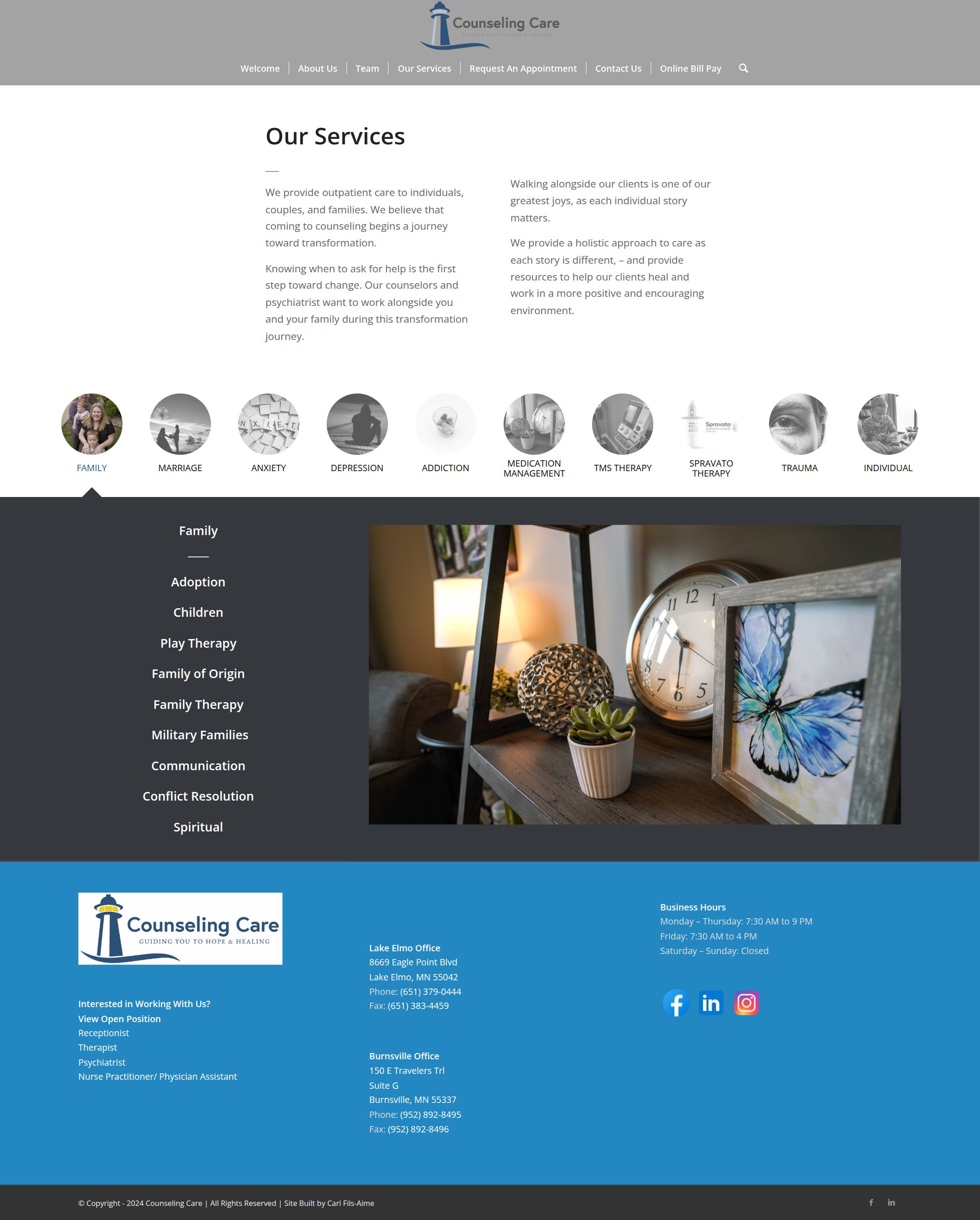
counselingcare.us/services/
Services page with grayscale desaturated icons and still-life stock imagery
Depression, anxiety, trauma — the very things people arrive in pain over — are rendered as cold grayscale icons and still-life stock (plants, clocks, butterflies). No human faces, no warmth, no hope. The imagery is as silent as the words.
Fix: Lead with the visitor’s feeling and the outcome they want. Replace still-life stock with real, warm photography of people — faces, eye contact, hope.
06

No single thing to do next

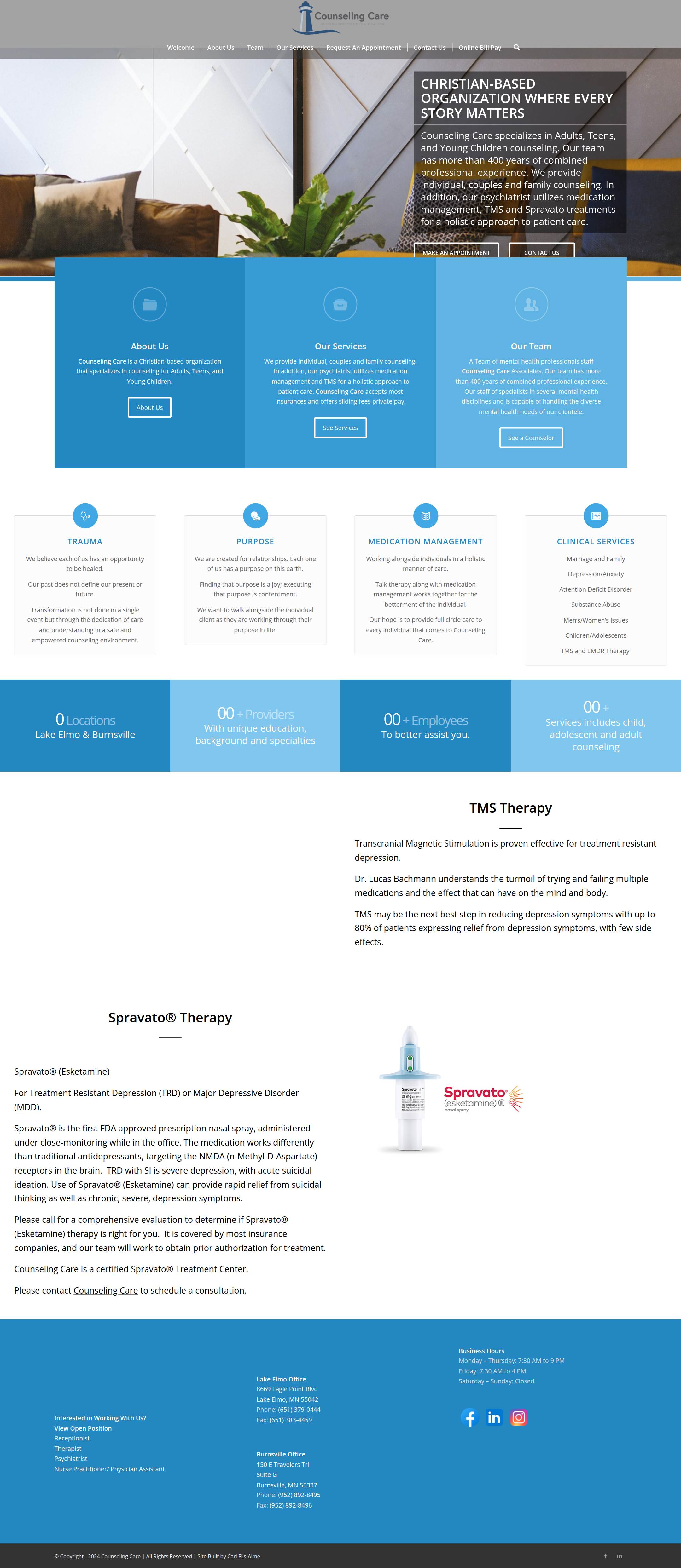
counselingcare.us — homepage
Homepage showing three near-identical blue ghost-button CTA blocks
Three equal calls to action, so there’s really none. Below the hero sit three near-identical blue panels — About Us / Our Services / Our Team — each with an outline-only ghost button. The whole palette is one cool blue, so nothing stands out, and not one of them says “Request an appointment.”
Critical · Primary action

When three buttons shout equally, the visitor hears nothing.

A landing page should have a high attention ratio — ideally one primary action per page. The homepage offers three competing ones in identical weight, plus ghost buttons that barely read as buttons at all, in a monochrome blue where nothing can stand out. GetUplift found that simply removing a secondary CTA produced +18% calls and +45% form completion — clarity of action is one of the highest-leverage changes you can make.

The friction compounds: there’s no phone number in the header. For someone reaching out in a low moment, a visible tap-to-call number is often the lowest-friction path to help — and it’s missing from every page’s most prominent spot.

Sources: GetUplift — removing a secondary CTA · Unbounce — attention ratio · NN/g — visual hierarchy

+18%
more phone calls when a competing secondary CTA was removed — one clear action beats three. GetUplift
+45%
more form completions from that same single change. Focus converts; choice paralyses.
Fix: One primary action everywhere — “Request an appointment” plus tap-to-call — given a single warm accent reserved for it, so it’s unmistakably the next step.
07

Trust & friction leaks

Reaching out for mental-health care is already hard — stigma drives people to delay or avoid it (APS). Three quiet details add friction at exactly the moment a visitor is most likely to talk themselves out of it. Each is a near-zero-cost fix.

High

“NOT reviewed daily”

The Contact page says, verbatim: “Please call us with anything that is time sensitive as information from this site is NOT reviewed daily.” To someone reaching out in a low moment, being told the form may sit unread for days is a direct anxiety and abandonment trigger.

Sources: APS — stigma as a barrier · NN/g — trustworthy design

Medium

Stale & dead details

In mid-2026 the footer still reads “© Copyright 2024.” A nav link to /our-services/ 404s with “Nothing Found.” Small things — but trust is judged partly on whether content looks current and maintained.

Source: NN/g — trustworthy design

Medium

Vanity metrics about them

The 10+ Providers / 10+ Employees vanity-metric band

10+ Providers · 10+ Employees” sit side by side — redundant, and inward-facing. They describe the practice, not the visitor’s outcome (relief, a fast appointment, being understood).

Credit where due

The fundamentals that are hardest to fake are all here: a real, licensed team, two locations, insurance and sliding-scale options, and high-value care like TMS and Spravato for treatment-resistant depression — plus genuinely strong SEO and page speed. These are real assets to build on. This is a redecoration, not a demolition.

08

On the phone — where people in crisis actually look

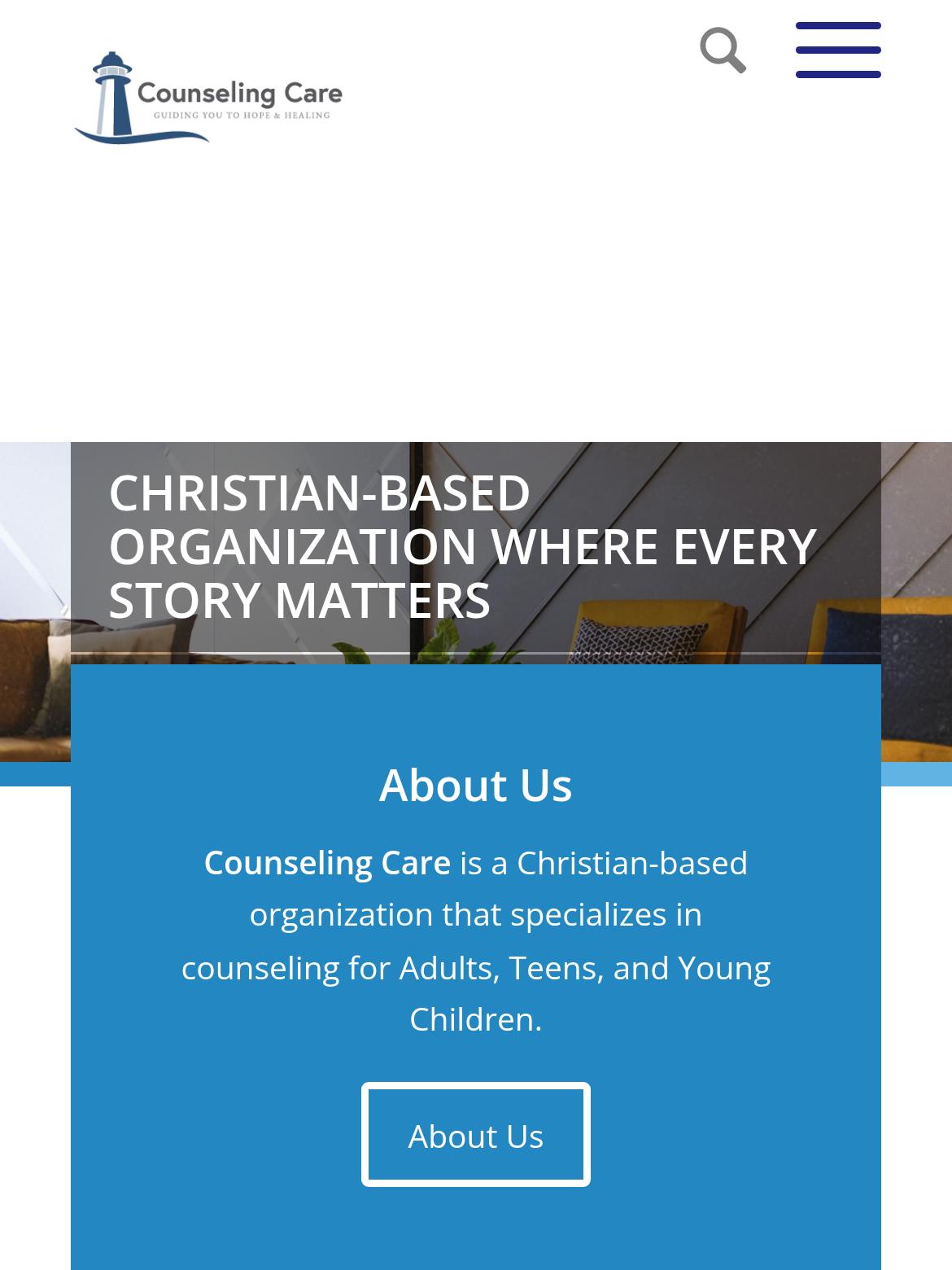
Homepage on a phone, full length
Low-contrast all-caps white headline over the plant photo on mobile
High · Mobile

The mobile hero leads with the org’s identity, in low-contrast type, with no way to call.

On a phone, the headline reads “CHRISTIAN-BASED ORGANIZATION WHERE EVERY STORY MATTERS” — white, all-caps, set over the busy plant-and-chairs photo. It’s hard to read on a sunlit screen, and it leads with who the practice is rather than what the visitor needs. There’s no tap-to-call, and a long scroll before any reassurance.

People barely read on the web — 79% scan rather than read word-for-word (NN/g). So for an anxious visitor, the reassurance and the way to act both have to be instant and impossible to miss. Right now they’re neither.

Fix: A mobile-first hero in the first screen — the visitor’s feeling in plain high-contrast type, a tap-to-call number, and a “Request an appointment” button — before any scroll.
09

Heuristic scorecard

DimensionGrade The one-line verdict
Clarity / value propositionFNo 5-second answer; the hero is decoration.
Emotional resonanceFSpeaks about the org, not the hurting visitor.
Primary action / conversionD−Three equal ghost CTAs, no “book / call now.”
Visual hierarchy & colorDMonochrome blue; nothing stands out.
Imagery / human warmthD−Plants, clocks, drone shots — almost no faces.
Trust signalsC−Real assets, undercut by “not reviewed daily” & © 2024.
Mobile experienceCLow-contrast hero, no tap-to-call, long scroll.
Performance (mobile)A−LCP 2.3s — a genuine strength. Protect it.
AccessibilityBLighthouse 90 — solid foundation.
SEOAScore 100 — a real asset to protect.

Grades are heuristic (research-first CRO lenses + first-party measurement), not a single automated number. Speed, accessibility and SEO are genuine assets — the redesign should protect every one of them.

10

The recommendation

Bottom line: this isn’t a performance fix — it’s an emotional-resonance and conversion redesign. Keep WordPress if you like it, keep the speed and the SEO, keep the real care this practice delivers. Change the conversation the page has with the person reading it. Here’s the order we’d do it in.

Now Quick wins — days, not weeks

Stop the bleeding on the current site while the redesign is built.

  • Add a sticky header with a tap-to-call number and one “Request an appointment” button.
  • Rewrite the hero to name the visitor and the relief — not the organization.
  • Fix the footer year (make it dynamic) and the dead /our-services/ link.
  • Add real faces — warm photography of clinicians and people, not still-life stock.
  • Surface Google reviews and licensing where a nervous visitor can see them.
  • Kill or soften the “information from this site is NOT reviewed daily” line.

Next The redesign

A conversion-first rebuild, measured against the same lenses used here.

  • Emotionally-resonant, message-matched landing pages per service for the ads — anxiety, depression, TMS, Spravato, couples.
  • One primary action throughout, with a warm accent reserved for it on a Hoist-grade design system.
  • Real photography of real people — faces, warmth, hope — in place of cold stock.
  • Keep WordPress if desired, but shed the Enfold / Avia builder bloat (370 KB unused JS).
  • Protect the speed and the SEO — they’re assets most competitors don’t have.

The one thing to take away. You don’t need a faster server or a new platform. You need a site that sounds like it understands them — so the people already clicking your ads actually reach out. That’s the whole gap between a good practice and a full schedule.

11

Sources & method notes

First-party measurements — Lighthouse runs and screenshots — were captured by Hoist on 30 June 2026. External references below back every cited statistic; click to verify.